How to Create a Stylish Outdoor Seating Area on a Budget
Spend first on comfortable, sturdy seating, then add character with cheaper layers such as cushions, lighting, plants and a rug. A small, well-chosen set with a few thoughtful touches looks better than a big cheap one with nothing around it. Keep a little money back for covers, because looking after furniture costs less than replacing it.
Where should a small budget go first?
A seating area has four parts, which are the furniture, the soft furnishings, the lighting and the planting. Put most of the money into the furniture, because good seating lasts years while the styling can change each season. The table shows where the rest can be done cheaply.
| Item | Spend or save | Why |
|---|---|---|
| Main seating | Spend what you can | Frame quality and comfort decide how long you use it |
| Cushions and throws | Save | Easy to upgrade later, and colours can be mixed |
| Covers | Spend a little | They protect the main purchase |
| Lighting | Save | Solar and plug-in lights are affordable |
| Planting | Save | Seeds, cuttings and swaps cost little |
| Rug | Save | Outdoor rugs come at a range of prices |
Buying a set that suits the space
An oversized set eats both the budget and the patio. Measure the space and choose the smallest set that does the job. A bistro set is an easy start, and a bench or folding chairs can follow later. If you want something larger, read our guide to choosing garden furniture before you commit.
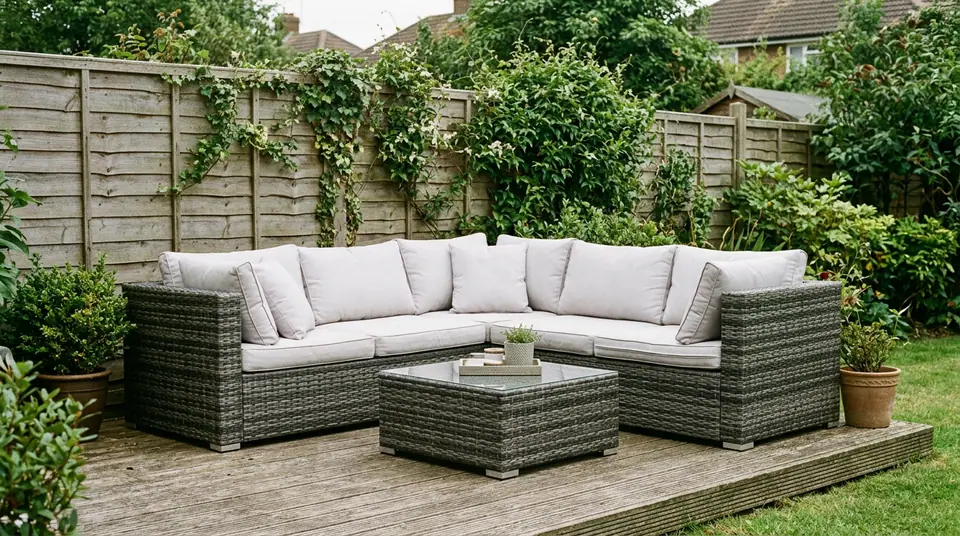
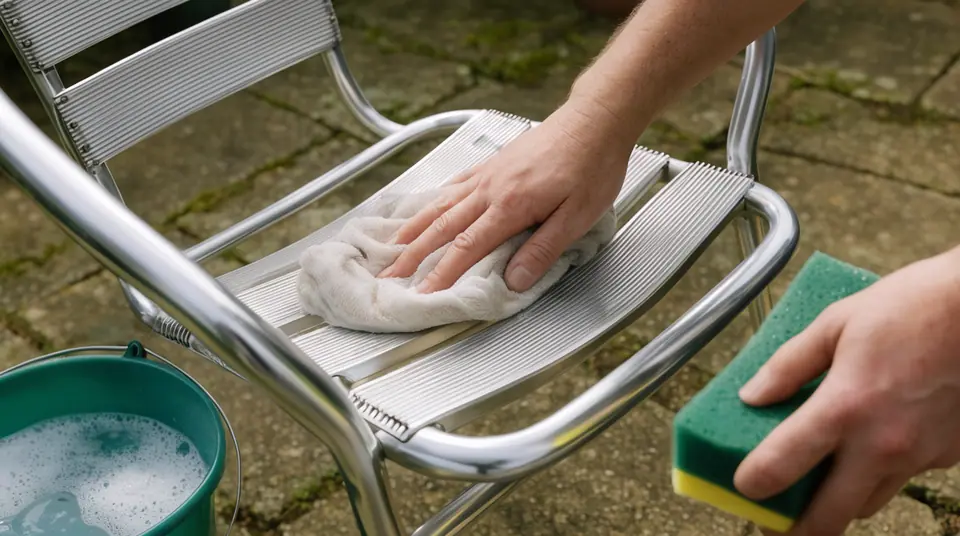
Think about the materials too, because the price at the till is only part of the cost. A steel set may need rust touch-ups, and acacia needs sealing or oiling to keep its colour. Aluminium, and weave over an aluminium frame, ask for little more than a wipe.
Is reduced or end-of-line stock worth a look?
It can stretch a budget a long way. Browse the garden furniture sale and weigh the catches, which are limited colours, returns terms, warranty and spare cushions. Our guide to the best time to buy garden furniture explains when reductions usually appear.
Add delivery to the sum before you decide. A large set can carry a charge that cancels a saving, and a flat-packed one may need a second pair of hands.
Is a secondhand set worth buying, and can you paint it?
What to check on a secondhand set
It can be worth it, if you inspect the set properly. Sit on it and rock it, because a loose joint or wobbling leg means a poor frame. Look underneath for rust at the welds and feet. On wood, press a thumbnail into the feet and the joints, as soft wood there signals rot. Ask whether cushions and fixings are included, and whether the maker still sells replacements.
Take a tape measure, and bring a friend if the piece is heavy. A free bench with a rotten leg costs you a weekend, not a saving.
Colour, comfort and cushions
Pick two or three colours and repeat them. A neutral frame in grey, black or natural tones lets you change the cushion colours each year. A scatter of many shades looks busy on a small patio.
Comfort is what gets people outside. Add scatter cushions, a seat pad or a throw for cool evenings. Outdoor fabrics cope better with damp, but they should still come in when it rains. If the seat cushions are worn, new garden furniture cushions can freshen an older set for far less than a new one.
What is the cheapest way to light a seating area?
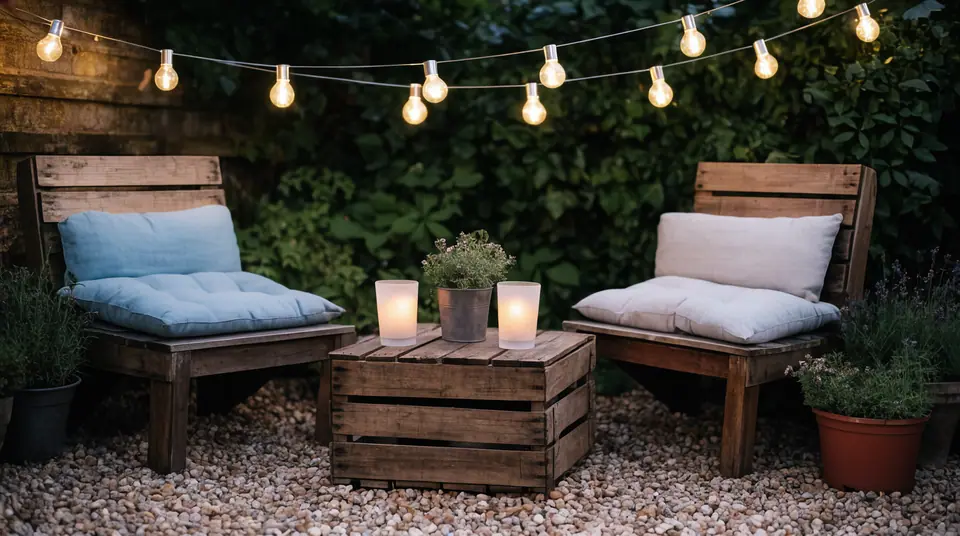
Lighting changes how the space feels after dark and adds hours of use. Festoon lights along a fence, solar lanterns on the table or a small plug-in lamp all work. Choose outdoor-rated products, and have any mains-powered item installed by a qualified electrician where needed.
Solar lights cost nothing to run, but they need a spot that gets sun through the day. Warm white bulbs flatter wood and plants, while cool white looks harsher. Keep the lights low and out of eyeline so the glow lands on the table and not in people's faces.
Plants and a rug to define the space
Pots of herbs, trailing plants on a wall and a few tall planters soften hard surfaces and add privacy. Grow from seed, take cuttings or swap with neighbours. Group pots of different heights near the seating, because a cluster looks planned.
An outdoor rug, a patch of gravel or a few decking tiles marks out the area. Even a modest rug makes the corner feel like a room, and pads under the feet keep furniture off wet ground.
How do you paint garden furniture?
A secondhand bench or table can look new after a clean and a coat of paint or oil. If a frame is rusting through or the wood is rotting, it is not worth the effort.
To paint wood, sand it lightly, wipe off the dust and apply an exterior paint made for wood. For metal, brush off loose rust, apply a rust-inhibiting primer and finish with a metal paint. Allow each coat to dry fully, and follow the tin for timings. Do not paint over a surface that is wet or dirty. Paint for plastic or woven seating must be made for those surfaces, so read the tin before you start. Work outdoors on a dry day, and let the paint cure for a few days before the furniture takes any weight or rain.
Mistakes that cost budget buyers money
The biggest is buying too many pieces at once. Build up over a season and the space will suit you better. Skipping covers makes furniture age faster, and the cheapest option with a short life means paying twice.
Cheap care also keeps furniture looking good. Wash it each spring, wipe off bird droppings quickly, and touch up chips before rust or damp spreads. A tin of paint and a soft brush cost far less than a new set, and ten minutes each month adds years of use.
Start with a measured space and a compact set, add a cover and two cushions, then bring in lights, a rug and plants as money allows. Within a season you will have a corner you want to sit in.