When Is the Best Time to Buy Garden Furniture in the UK?
Garden furniture is typically reduced from late summer into autumn, when sellers clear this year's ranges to make room for new ones. That is often the cheapest time to buy. It is not always the best time, because sizes and colours run out and spare parts can be hard to find. Buy in spring for choice, and in autumn if you are flexible and know what you are looking for.
How the buying year usually works
Garden furniture is seasonal. Demand rises with the first warm weekends, and sellers plan their stock around it. The pattern changes between sellers and from year to year. Nobody can promise a particular reduction on a particular day, so treat the table as a general guide.
| Period | What you can typically expect | Main trade-off |
|---|---|---|
| Late winter to spring | New ranges arrive with the widest choice | Fewer reductions |
| Early summer | High demand, and popular sets can sell out | Prices tend to hold |
| Late summer into autumn | Reductions on ranges being replaced | Limited sizes, colours and spares |
| Winter | Remaining stock may be cleared | Slim choice, and months before you can use it |
Autumn or spring for buying
If you already know the set you want, autumn reductions can make the cost easier to manage. You also have time to measure, plan and arrange covers or storage before the bad weather arrives. Our garden furniture sale page lists reduced lines that remain part of the range.
Spring suits people who need a particular size, colour or layout, or who want to use the furniture from the first warm weekend. You pay more, and you also get the full choice and the easiest route to matching extras later. Early buyers can also spread the cost of cushions, covers and extra chairs across the season.
Spring buyers can test a set in decent weather, too. If the chairs feel wrong after a fortnight, you still have the summer to swap them. An autumn buyer has to wait until the following spring to find out.
The catches with clearance stock
Last stock and ending lines sit on our garden furniture clearance page. A lower price can come with compromises, so read these points before you click.
- Limited stock. Sizes and shades sell through unevenly, and a matching bench or extra chairs may not return.
- Returns. Check the period and the condition the item must be in. Our returns and refunds page explains how this works here.
- Warranty. Terms on end-of-line products can differ, so look at what is covered and for how long.
- Spare parts. If a line is discontinued, replacement cushions may be hard to find. Standard-sized cushions can fill the gap.
- Delivery. A large set can carry a charge that eats into the saving. Read the delivery information first.
How do you tell whether a reduction is good value?
Start with your must-haves, which are size, material, seat count and colour. A reduction on the wrong set saves you nothing. Then add up the full cost, including delivery, covers and any cushions you need to buy.
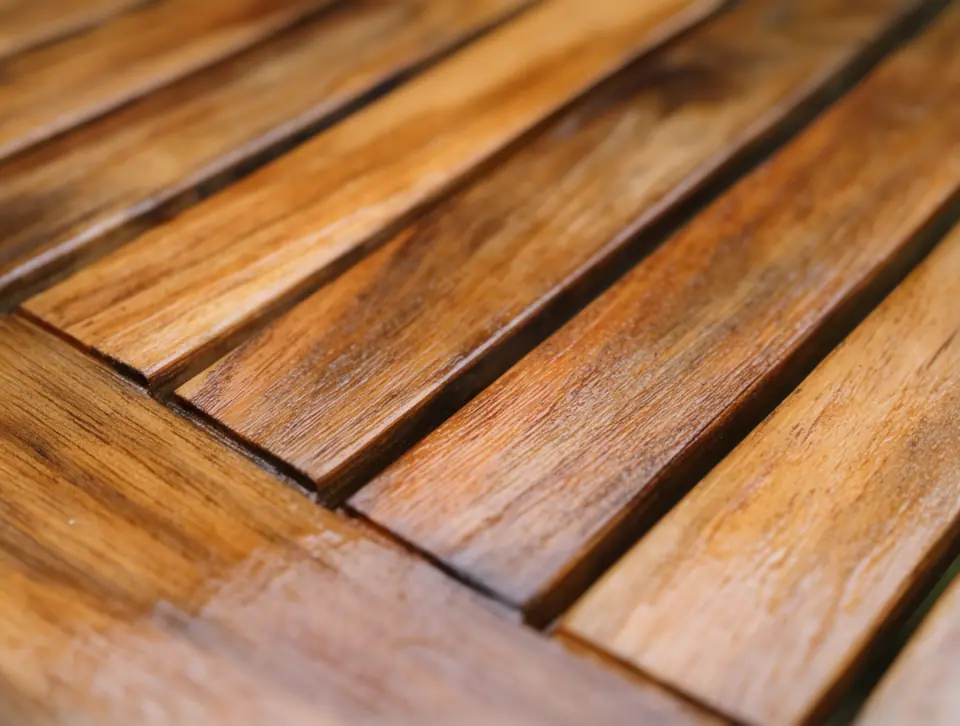
Compare materials as well as prices. A cheaper steel set may need more touching up than a dearer aluminium one, and acacia needs oiling or sealing to keep its colour. Read our guide to garden furniture materials before you judge a bargain. For ex-display or end-of-line items, read the notes on marks, missing parts and packaging, and ask for photos if the listing has none.
Be wary of comparing against a high original price. What matters is whether the set suits your space and whether you would pay the current price for it with no sticker beside it.
Ex-display items have been on show, so they may carry marks, scuffs or missing fixings. Sample items demonstrate a range, and the description should say exactly what you will receive. Read the condition notes in both cases, and never assume the price difference covers a fault.
Is it worth waiting for the lowest price?
Waiting carries a risk. The set you want may sell out in your size, and a better price next week is a guess. If you would be happy with three different sets, waiting costs you little. If you want one particular set, weigh an extra week of saving against a summer without a table. Decide the most you will pay, and buy when the right set reaches it.
What should you do if you are furnishing a new garden?
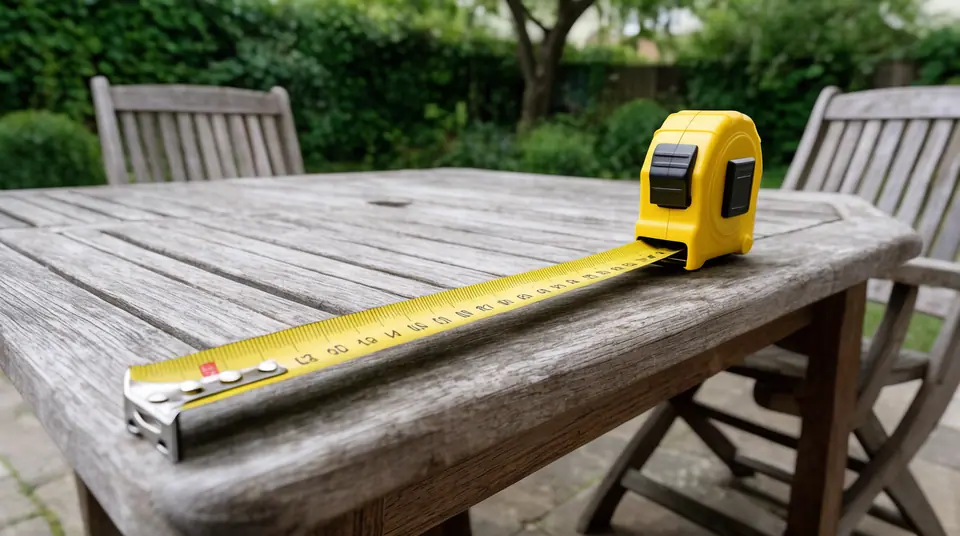
Start with the main set and leave the extras. Cushions, covers and a parasol can be bought later, often in autumn too. Measure before the first purchase, because returning a heavy boxed set is a hassle. Take a photo of the patio with a tape measure on the ground, so you can compare listings against the real space.
What should you ask before buying reduced furniture?
- Is this the last of the line, and are spares available?
- What is the returns period, and what condition must the item be in?
- Is the item new, ex-display or a sample, and what does that mean for the warranty?
- How is it delivered, and is there a charge for my postcode?
Write the answers down next to the price. A reduction that looks large can shrink once the rest is counted.
Buying in autumn and storing until spring
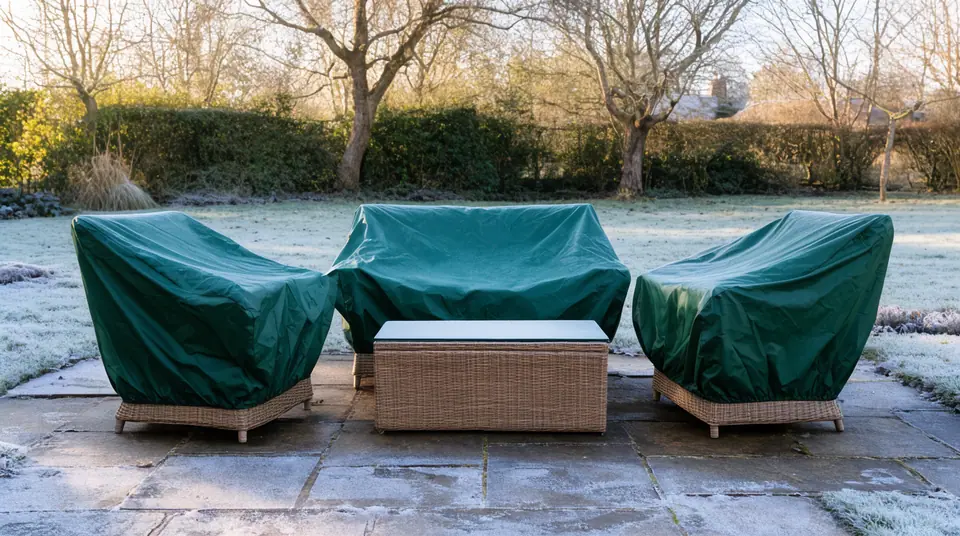
A set bought in October has months to wait before use. Keep the boxes if you plan to store it flat in a shed, and check the shed is dry first. Otherwise cover the set with a breathable cover, and leave the cushions indoors. Our guide to protecting outdoor furniture in winter explains the steps.
If you are open to different designs, keep a shortlist through late summer and check it each week. If you have a firm idea, buy when the right set is in stock and do not wait for a sale that may pass it by. Either way, put a deadline on the decision so a good set does not slip away while you compare.