How to Choose the Best Garden Furniture for Your Space
To choose garden furniture, start with the space, then the weather, then the upkeep. Measure the patio so you know what size of set fits. Pick a material that suits your garden's exposure and the amount of cleaning you are happy to do. Style can wait until those three are settled, and by then you will have far fewer sets to compare.
The sections below follow that order, and point to our other guides where a topic needs more room.
Measuring the space you have
Mark the footprint on your patio with masking tape or chalk and leave it down for a day. You will soon see whether the set blocks the back door, squeezes the path or crowds a border. Use the full width and depth of the product, including the arms and the extra length of any extending leaf.
As a rule of thumb, leave 75cm to 100cm behind dining chairs so people can sit down while others walk past. Check the route to the garden too, because a boxed set has to fit through your side gate or hallway before it reaches the patio. Heavy sets can be hard to carry round a tight corner, so ask for the packed dimensions.
Tight plots call for different thinking, and our guide to garden furniture for small gardens covers layouts for them. If you want a table for eating, the dining set size guide gives table sizes for each number of seats.
Matching the type of set to how you use the garden
Think about the one job your furniture will do most often. A set for Sunday lunch is a different buy from one for evening drinks, and table height is the main difference between them. Count the people who sit out in a normal month, not the biggest party of the year. A couple of folding chairs can cover the occasional crowd.
| Main use | Set type | Worth knowing |
|---|---|---|
| Family meals outdoors | Garden dining set | Needs more floor area than any other type |
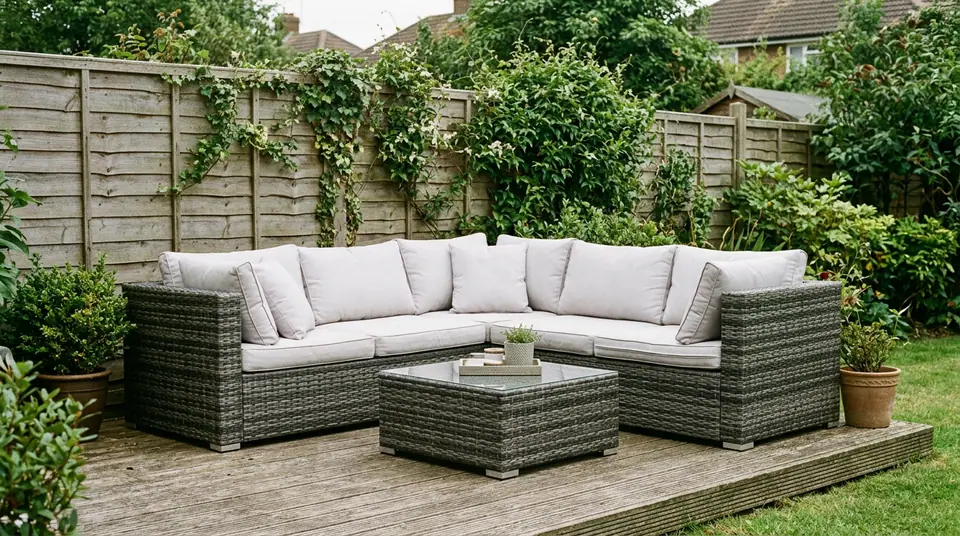
| Relaxing and conversation | Sofa set or corner sofa set | Cushions need storing or covering |
| Low, casual seating | Lounge set | Coffee-table height suits drinks and snacks, but not full meals |
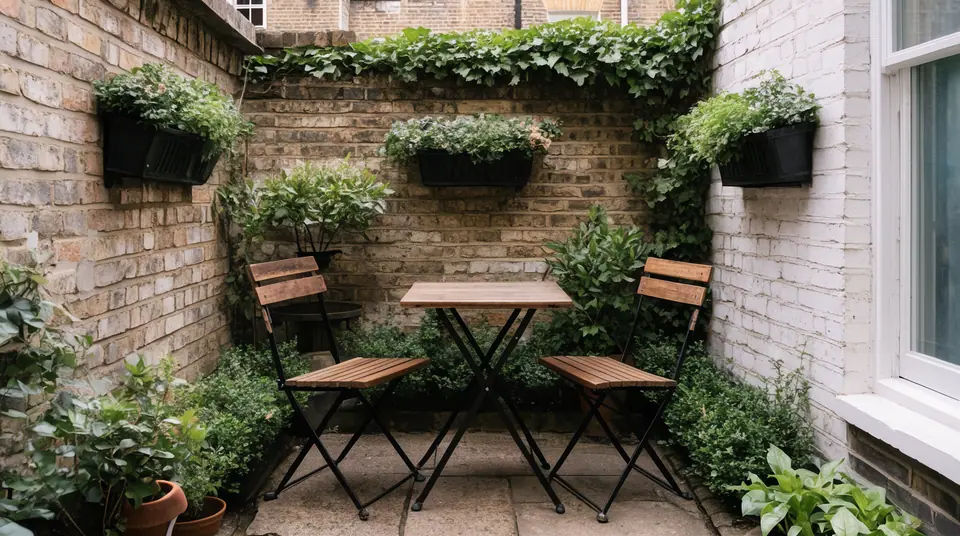
| Two people, small space | Bistro set | Often folds away for winter |
| Sunbathing | Sun lounger | Check the reclining positions and the weight limit |
Sun and shade deserve a thought too. A table in full afternoon sun is pleasant in April and punishing in July, so note where the shade falls at the time you usually eat. If you plan to use a parasol, check that the table has a hole for it or that you have room for a heavy stand.
What material suits the upkeep you will do?
Every material trades looks against weight, durability and effort. Decide how much cleaning, oiling and touching up you will do, and the choice narrows quickly.
- Rattan-style weave. Most is synthetic PE weave over a metal frame. It is light and comfortable, and needs washing down now and then. Ask what the frame is made from.
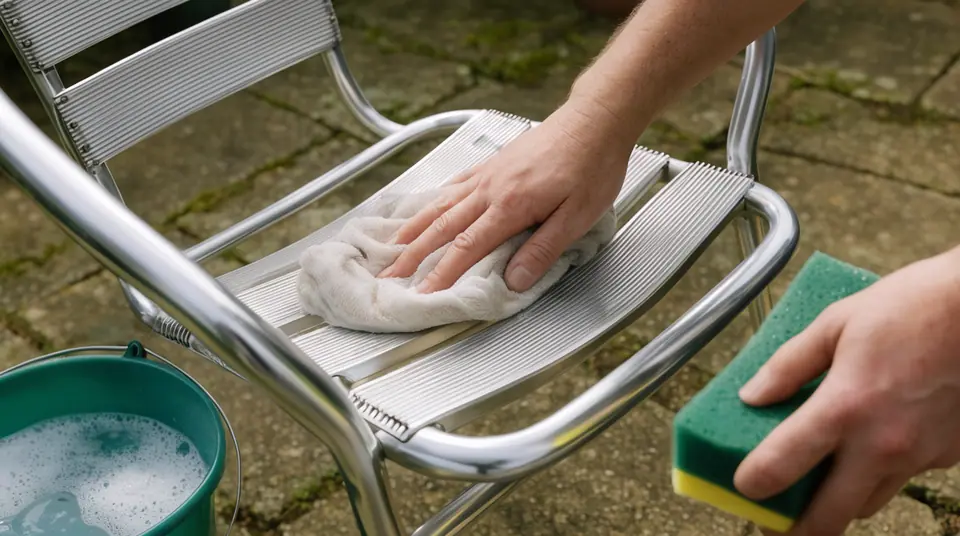
- Aluminium. It does not rust and is light enough to move about. It can oxidise, and powder coating can chip if knocked.
- Steel. It is strong and often good value, but it rusts wherever the coating is damaged.
- Hardwood. Teak and acacia weather to silver-grey unless you treat them. Acacia generally needs more upkeep than teak.
Exposure matters as well. A windy garden suits a heavier frame, and a coastal one punishes any metal with a damaged coating. If you want the least work, browse our low maintenance garden furniture. For a fuller breakdown, read garden furniture materials explained.
Can you put garden furniture on grass or artificial grass?
You can use both, but they are harder on furniture than paving. On a lawn the legs sink into soft ground and the set can tip on a slope. The grass underneath turns yellow if the furniture stays in one spot for weeks. Standing the set on slabs, decking tiles or an outdoor rug solves most of this. Damp ground also shortens the life of wooden feet and steel tips, so fit pads under them.
Artificial grass copes with weight better. Heavy metal feet can still dent the pile, though, and sharp edges can cut it, so rubber or plastic feet pads help to spread the load. Embers and hot metal can melt the fibres, which means a firepit table should stand on a slab. Check the turf maker's advice before you decide.
Comfort, cushions and covers
Cushioned seating feels better but needs somewhere dry in wet weather. A deck box, a shed shelf or a spare cupboard works for the cushions, and the frames can then sit under covers. Removable cushion covers are easy to wash, which matters more than most people expect.
Cushions are usually the first part to wear out, so check that replacements exist before you buy. Our garden furniture cushions page is a useful place to compare sizes. Sitting in a set before you buy tells you more than a photo. If you cannot, compare the seat height and depth with a chair you already find comfortable.
Extra costs to put in the budget
The price of the set is rarely the whole cost. Add covers, spare cushions and any delivery charge. If you are buying reduced stock, read the return and warranty terms. Ask whether the item is new, ex-display or a sample.
A cheaper set with a short life can cost more over five years than a dearer one that lasts. Work out the cost per season, not just the sum at the till.
What should you check before you pay?
- Have you marked out the footprint plus clearance and left it down for a day?
- Does the material suit the cleaning and oiling you will do?
- Do you know what the frame is made from and how the finish is applied?
- Is there a dry place for cushions in bad weather?
- Have you read the maker's care instructions?
If you can answer yes to each one, you are ready to browse the full garden furniture range with a clear idea of what you need.