
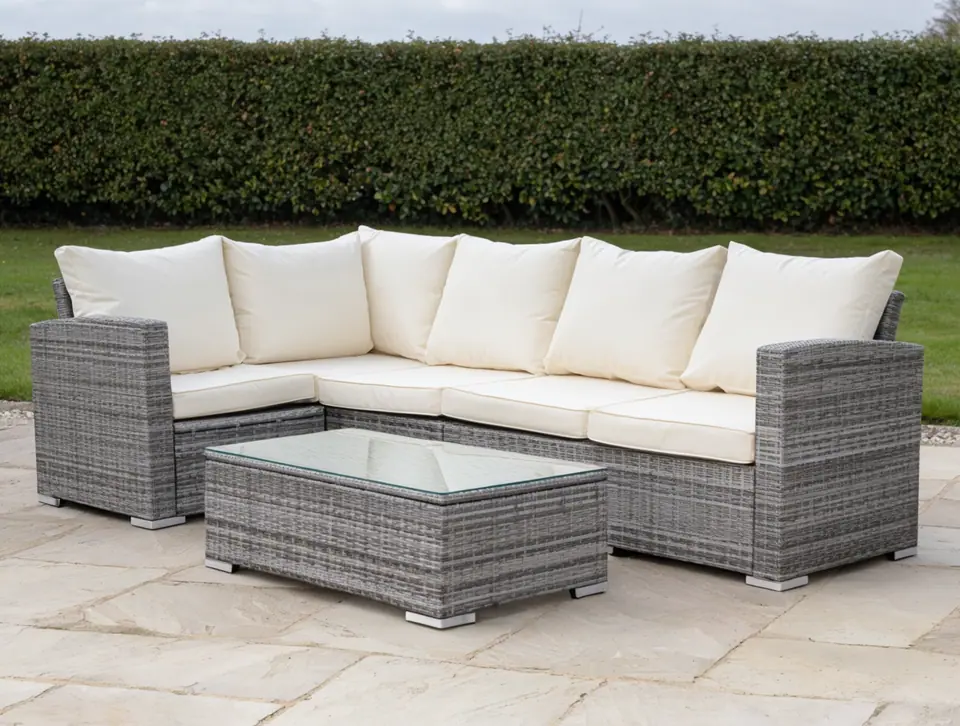
 Clearance sample
Weather-Resistant Garden Furniture
Weather-resistant garden furniture is built to cope with exposure, which is not the same as being weatherproof. This page explains what the label means in practice, how common materials behave in British weather and why cushions suffer first.
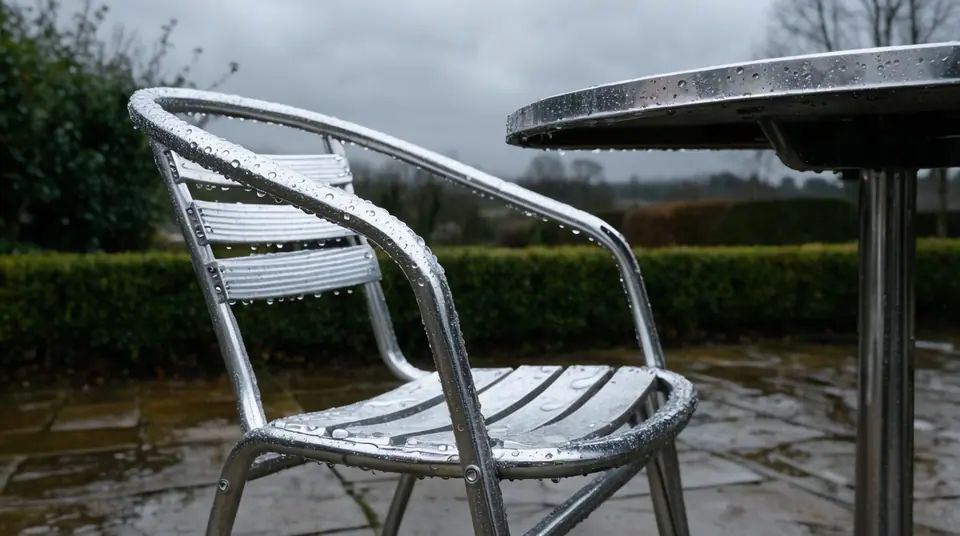
Sample products
Filter products
7 sample products
Clearance sample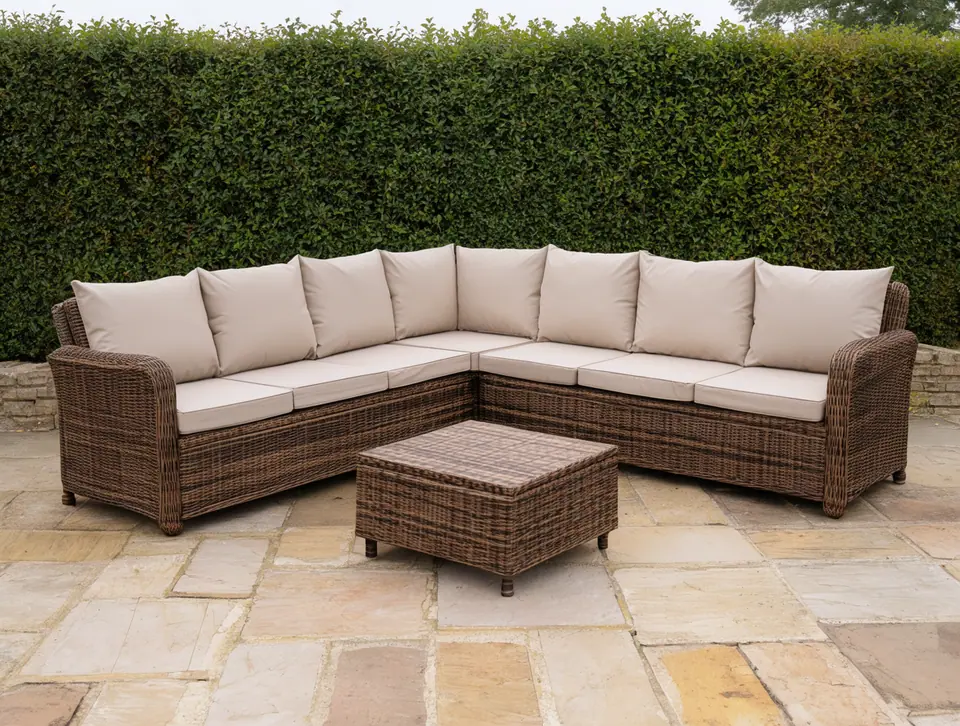 Clearance sample
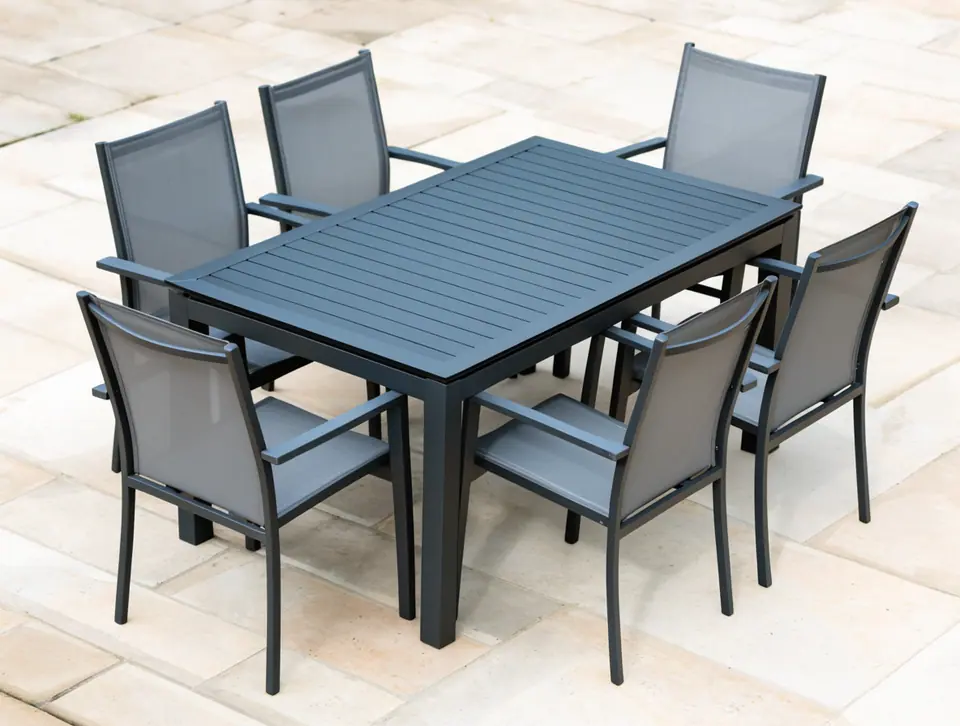 Clearance sample
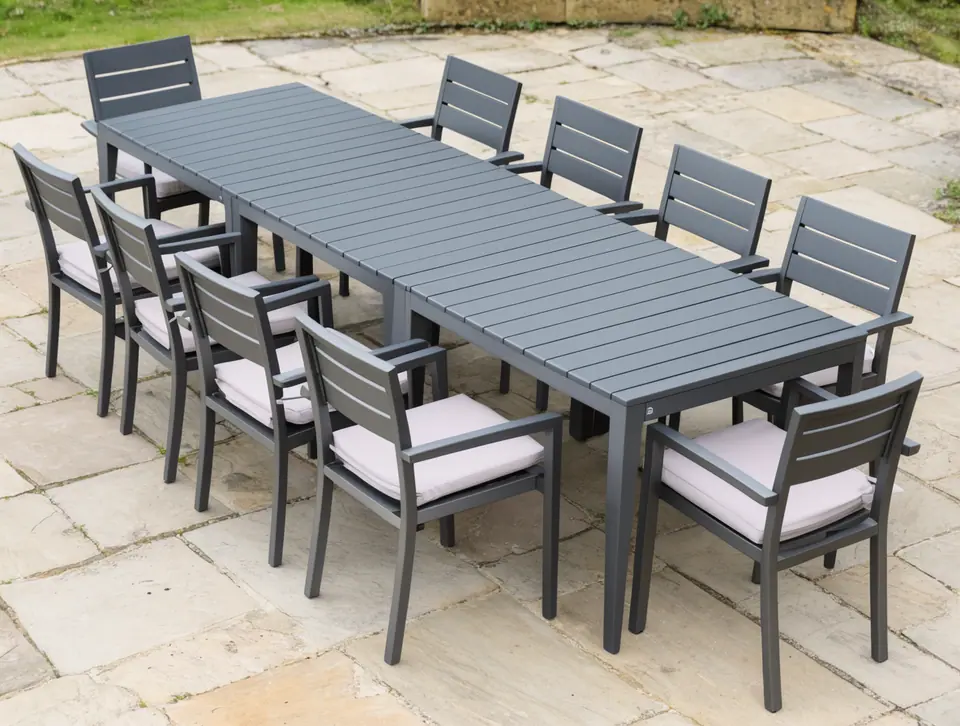 Sale sample
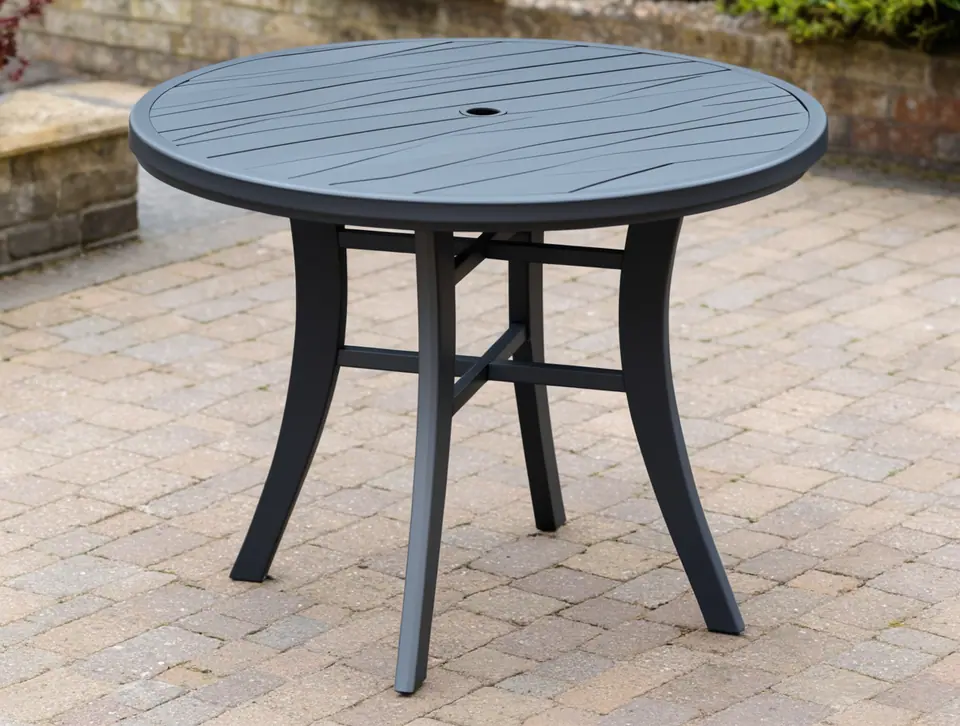 Clearance sample
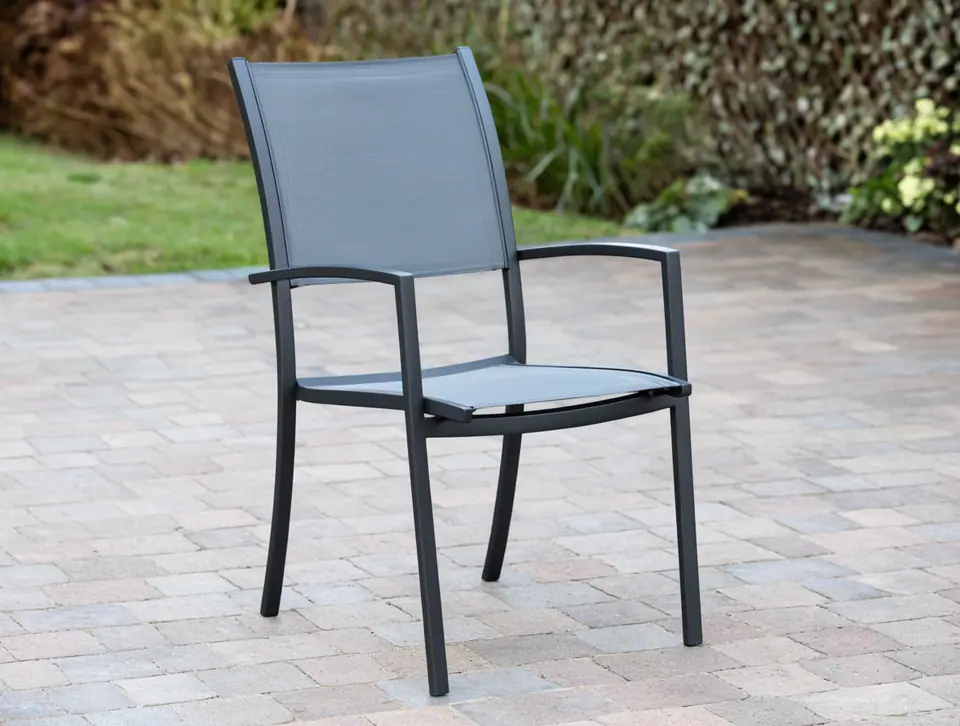 Clearance sample
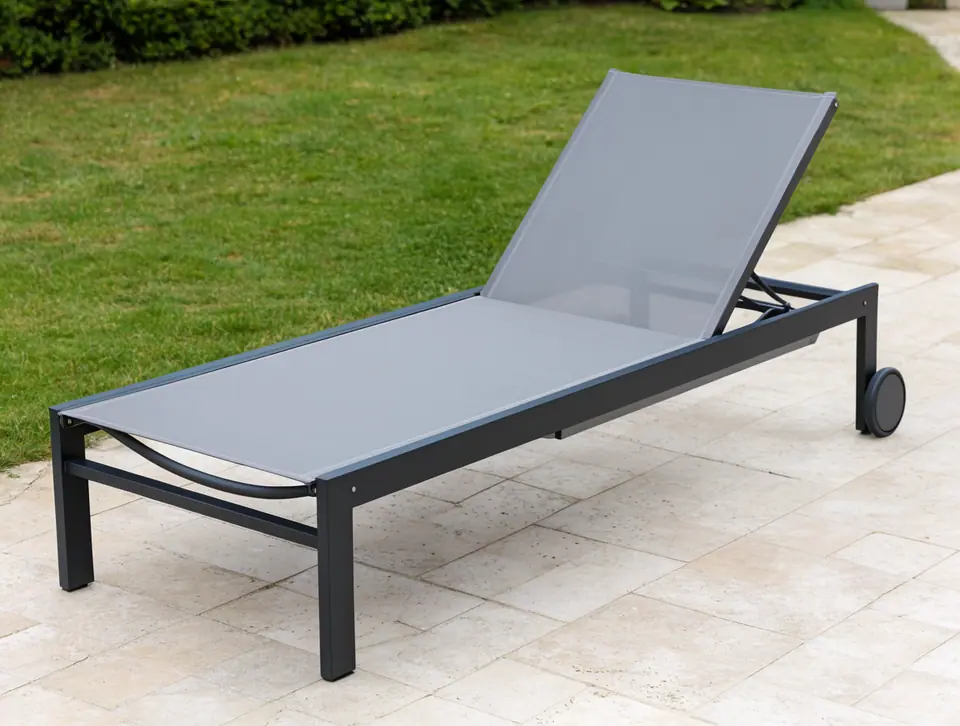 Sale sample
No sample products match those filters. Try clearing one or two.
What does weather-resistant mean in practice?
Very little outdoors is weatherproof. Weather-resistant means a material can handle exposure for a good while, usually with some care. In Britain that covers regular rain, damp, wind, sudden changes in temperature and a fair amount of UV in summer. The aim is furniture that copes with all of it without constant attention.
Can garden furniture stay out in the rain?
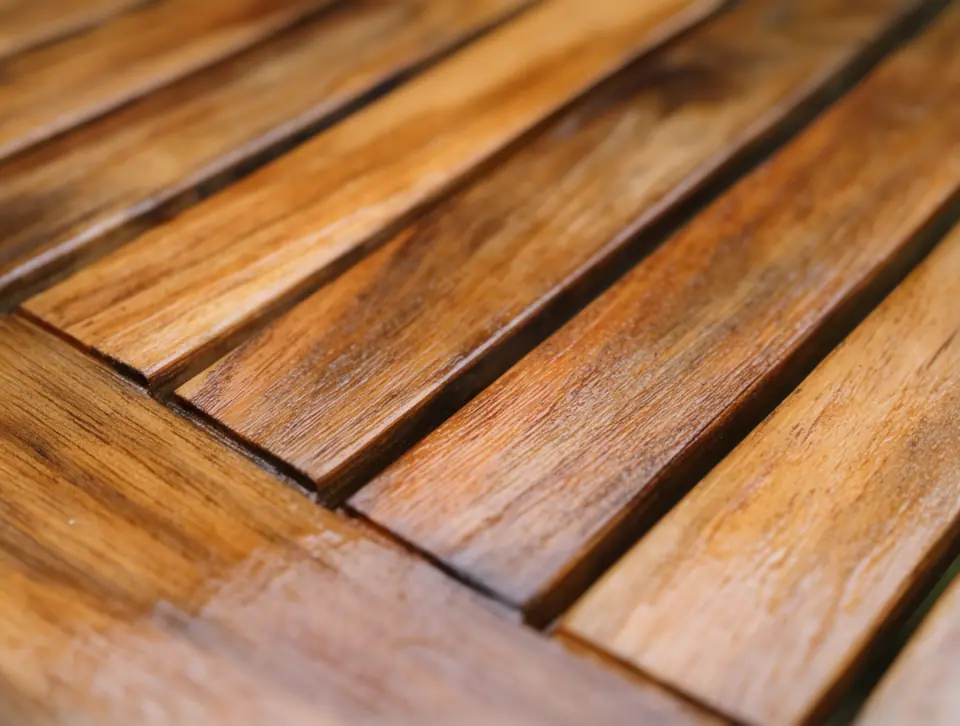
Most frames can, provided you know their weak points. Aluminium does not rust, though a chipped coating should be checked. Steel is strong, but it rusts where the coating is damaged, so touch up scratches promptly. Hardwood resists rot and weathers to silver-grey unless oiled. A synthetic rattan weave sheds water, but the metal frame under it matters more. The materials guide has the details, and the guide on leaving furniture outside all year covers winter.
How wind and sun affect different materials
Wind
Light furniture can blow about. Aluminium and woven sets are light, so shelter them, weigh them down or tuck them away before a storm. Heavy hardwood stays put but is hard to move. Take parasols down in a strong breeze, since they catch the wind like a sail.
Sun and UV
Strong sun fades dyes, makes some plastics brittle and dries out wood. Good weave is dyed through and treated against UV, though even the best colours fade over many summers. Pale colours hide fading better than dark ones, and oiled wood holds its depth of colour for longer.
Why cushions give up before the frame
Whatever the frame, cushions suffer most. Water-resistant covers help, but foam holds damp and mildew follows. The simplest fix is to bring cushions indoors or into a dry box when it rains and through winter. Look for removable covers and pads you can replace, and see garden furniture cushions for what is available.
Fitting a cover for the winter
A fitted cover adds years to any set, especially in winter. Pick a breathable one so condensation does not collect underneath. Our outdoor furniture covers come in a range of sizes. Lift the cover off on a dry, breezy day now and then, so any trapped damp can escape.
Common questions about weather-Resistant Garden Furniture
Is weather-resistant the same as weatherproof?
No. Weather-resistant materials cope with exposure but still gain from care, such as covers and dry storage for cushions.
Which material copes best with British rain?
Aluminium does not rust, and hardwood resists rot. Steel can rust where its coating is damaged, so inspect it regularly.
Why do cushions wear out so quickly?
Foam holds damp, which can lead to mildew. Storing cushions dry when it rains and through winter makes the biggest difference.
Buying guides that can help
Can Garden Furniture Stay Outside All Year?
Some furniture copes with a British winter if it is covered and cared for, but cushions and bare steel are best kept dry.
Read Guide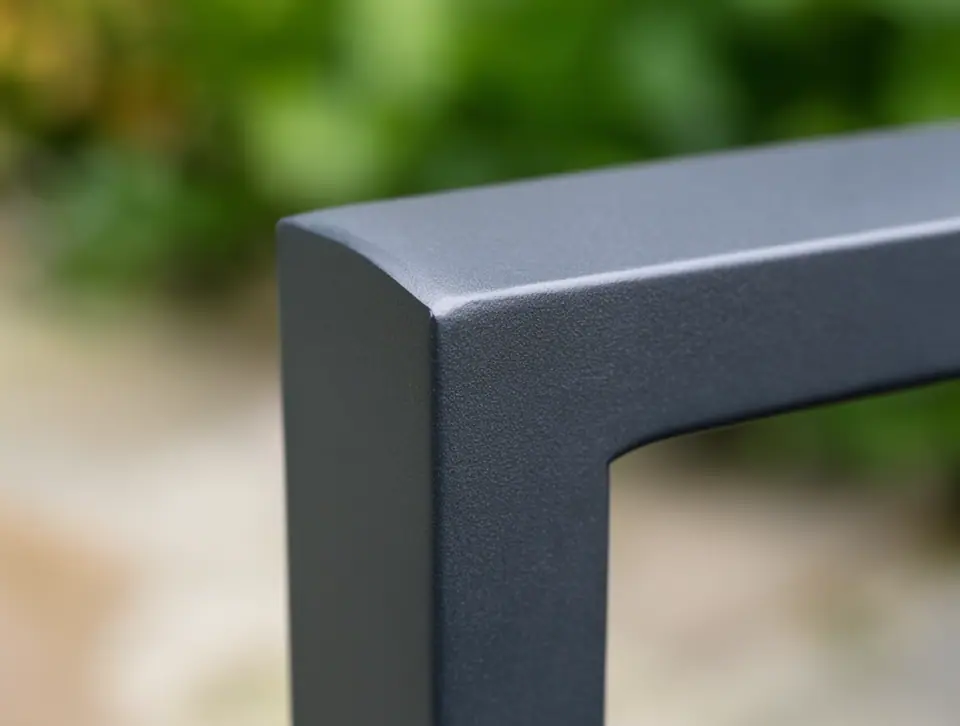
Garden Furniture Materials Explained
What synthetic rattan, aluminium, steel, teak, acacia and resin are made of, how they age and how much upkeep they need.
Read Guide