How to Protect Outdoor Furniture During Winter
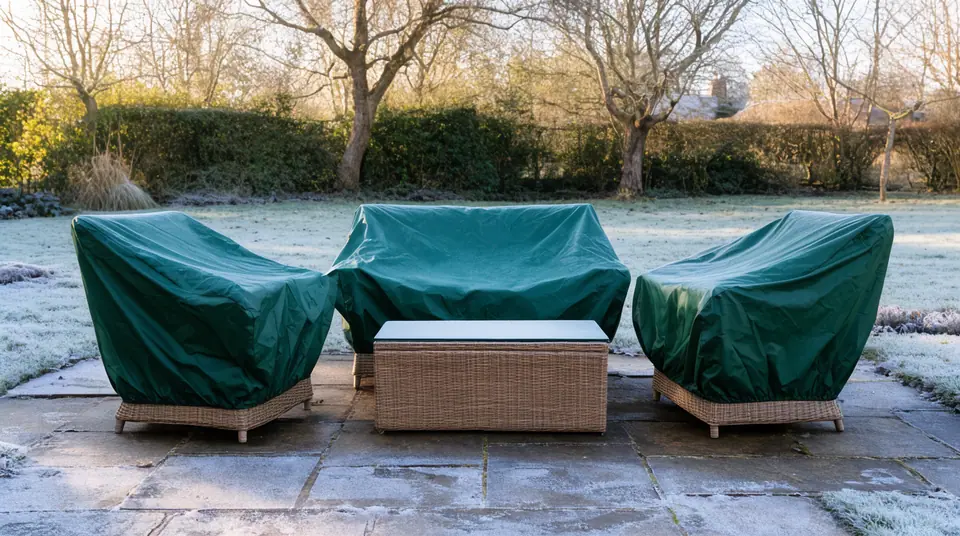
To protect outdoor furniture in winter, clean it, let it dry completely and bring the cushions inside. Then cover the frames with a breathable, well-fitted cover or move them into a shed or garage. Tie down anything that stays outdoors, and check it after storms. Follow the manufacturer's care instructions, as materials and finishes differ.
Clean and dry the furniture first
Dirt, leaf mould and bird droppings hold moisture against a surface and can mark finishes over the winter. Wash everything with warm water and mild detergent, then rinse. Our guide to cleaning and maintaining garden furniture explains which method suits each material.
Drying matters as much as washing. Moisture trapped under a cover leads to mildew, rust and swollen wood. Towel off the joints, hinges, underside of seats and hollow legs, then leave the furniture in the wind for a few hours. A fan heater in a garage speeds things up, but keep it well away from fabric and plastic.
What damage should you fix before winter?
Small faults get worse with frost and damp. Walk round the set and look for chipped powder coat or paint, especially on steel, where rust can start under the damage. Check for loose screws and wobbly joints, and look for frayed or lifted strands on woven furniture. On wood, watch for splits and raised grain.
Touch up chips with a suitable paint, tighten the fixings and repair strands now and not in spring. A dab of paint takes five minutes in October and saves a bigger job later. Photograph any damage you find, so that you can compare it in spring.
Where should furniture spend the winter?
| Option | Best for | Points to watch |
|---|---|---|
| Indoors, in a shed, garage or lean-to | Folding chairs, steel pieces, wooden furniture and cushions | Keep it dry and off a damp floor, with some airflow |
| Outside with a breathable cover | Aluminium, weave on rust-proof frames and hardwood | The cover must fit well and be tied down |
| Outside uncovered | Sturdy, weather-tolerant items | Expect weathering, greying and surface dirt |
If you are unsure which row your set belongs in, read whether garden furniture can stay outside all year.
Without a shed or garage, you still have choices. A lidded deck box or storage bench holds cushions and small pieces. Folding chairs can hang flat on a fence or wall bracket under the eaves, and a spare room, hallway or loft takes cushions and parasols. Stack what you can and cover the rest where it stands, with the cover pegged tight to the legs.
Choosing and fitting a cover
A cover shields furniture from rain, frost, leaves and droppings, but a poor one can do harm. Look for vents or a fabric that lets moisture escape, because sealed plastic sheeting traps condensation. The cover should reach close to the ground without dragging. A loose one flaps, and a tight one tears.
Measure your set at its tallest and widest points before you buy. Browse outdoor furniture covers and match the size to those figures. Never cover furniture that is still damp. If the set has a parasol hole, plug it, as rain running down the pole into a table is a common source of damp.
How do you secure garden furniture in wind?
Winter gales turn light furniture into a hazard and covers into sails. Straps, drawcords and clips on the cover stop the wind getting underneath, so use every one. Stand lightweight chairs together and chain or strap them to a fence post or a heavy planter. Stack chairs where the design allows, and lay a table top down if it unscrews.
Move anything light away from fences, glass and windows. A parasol should come down, and its base can stay put as ballast. After a storm, walk the garden and look for shifted furniture and loosened covers.
Looking after cushions, glass and parasols
Cushions are the most vulnerable part of any set. Brush them off, make sure they are fully dry and store them somewhere ventilated, such as a deck box, a shed shelf or a spare room. Avoid sealing damp cushions in plastic. If any need replacing, look at new garden furniture cushions before next season.
Take off removable glass and store it safely, or cover the table to guard against frost and falling debris. Close and store parasols, bring hammocks in, and disconnect any heater from its gas supply according to its instructions.
Hanging egg chairs and sun loungers need their own plan. Unhook the seat of a hanging chair and bring the cushion inside, and leave the frame to your usual cover routine. Loungers are light, so fold them flat and store them under a roof, or strap them together if they must stay out.
Does each material need different care?
Aluminium is low risk, so wipe off grime and cover it to keep the finish clean. Weave sets need their cushions removed and their legs raised on pads so they are not standing in puddles. Steel needs rust spots treated and drying fully, and storing indoors is the safest option.
Hardwoods such as teak and acacia can stay out and will go silver-grey. If you prefer the original colour, follow the maker's advice on sealer or oil, and expect acacia to need more attention than teak. Raise the feet off wet ground so water does not wick up into the grain.
Checking in during winter and in spring
After heavy rain, lift a corner of the cover and look for damp. On a dry, mild day, take the covers off for an hour to air the furniture. Brush snow off gently and do not let it pile up.
A short note in your phone helps. Write down the date you covered the set, which pieces went in the shed and where the spare straps live. That saves guesswork in March, and the whole job takes minutes.
When spring comes, remove the covers, wash everything and check the fixings. If a set did not survive as hoped, the garden furniture range has replacements, and our low maintenance garden furniture asks less of you next winter.