How to Clean and Maintain Garden Furniture
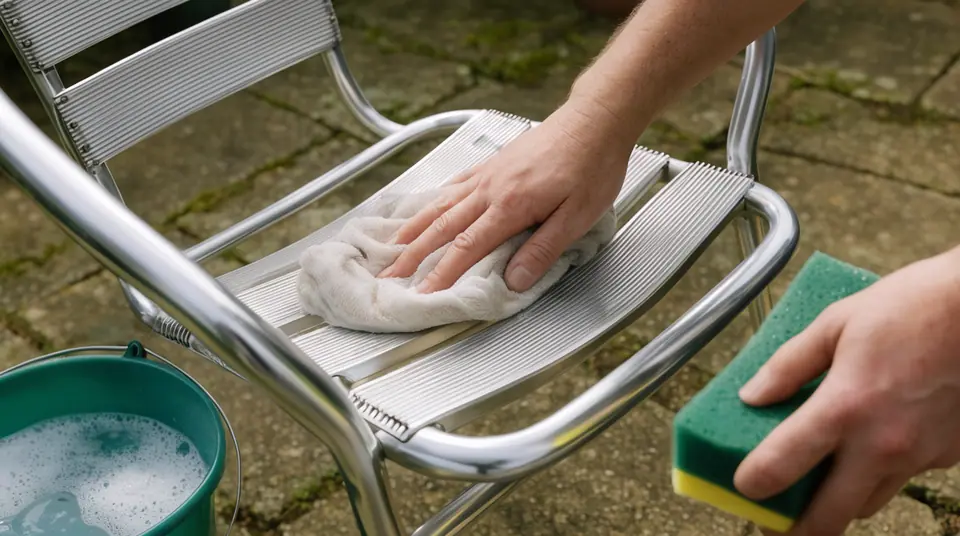
Warm water, a little washing-up liquid and a soft brush will clean most outdoor furniture. Work from the top down, rinse well, and leave everything to dry before you put a cover on. Read the manufacturer's care instructions first, because a finish that copes with one cleaner can be marked by another.
Different materials and fabrics need slightly different care, so the rest of this guide covers them one at a time.
What you need to clean outdoor furniture
Gather a bucket of warm water with a squirt of mild detergent, a soft brush, a few microfibre cloths and a hose on a gentle setting. A soft toothbrush reaches crevices and woven joints. Keep a towel or old sheet handy for drying.
Take the cushions off first and sweep away fallen leaves. Otherwise you wash dirt back onto surfaces you have just cleaned.
Leave bleach, abrasive pads and wire brushes in the cupboard unless the care guide says otherwise. They can strip coatings and scratch surfaces, and that gives dirt and water somewhere to settle.
How do you clean each type of furniture?
Rattan and woven furniture
Brush off cobwebs and loose dirt first. Then work along the strands with a soft brush and soapy water, rinse with a low-pressure hose and let the weave dry in the open air. Dirt packs into the gaps, so use a soft toothbrush to reach it. Our rattan garden furniture collection shows the common weave styles.
Metal furniture
Wipe aluminium with a cloth and soapy water, rinse and dry it. It does not rust, but it can oxidise to a dull, chalky film, which regular washing keeps in check. Steel needs a closer look at the joints and feet, because it rusts where the coating is damaged. Sand a rust spot back lightly, wipe away the dust and paint it with a rust-inhibiting product.
Wooden furniture
Scrub along the grain with a soft brush and soapy water, then rinse and let the wood dry fully. Green algae and grey staining respond to a second pass. Do not scrub across the grain, as that roughens the surface.
Plastic and resin furniture
Warm soapy water and a rinse is enough. For a stubborn mark, try a paste of bicarbonate of soda and water on a hidden patch first.
Glass and ceramic tabletops
Wipe with glass cleaner or warm water with a little vinegar, then buff dry with a lint-free cloth. Check the frame and fixings underneath, because water can sit there and start rust on steel. Do not use a scraper on glass, and never pour hot water onto a cold pane.
How do you clean outdoor cushions?
Check the label before anything else. Some covers unzip and go through the washing machine at a low temperature, while others are spot-clean only. Cushion inners should stay out of the machine unless the label says they can go in.
For a spot-clean, brush off loose dirt, sponge with mild soapy water and wipe with a damp cloth to remove suds. Dry the cushion flat or on its edge somewhere breezy. A damp cushion packed into a box will grow mildew, so wait until it is completely dry. If a cushion is stained beyond help, replacement garden furniture cushions give an old set a fresh start.
Restoring weathered wooden furniture
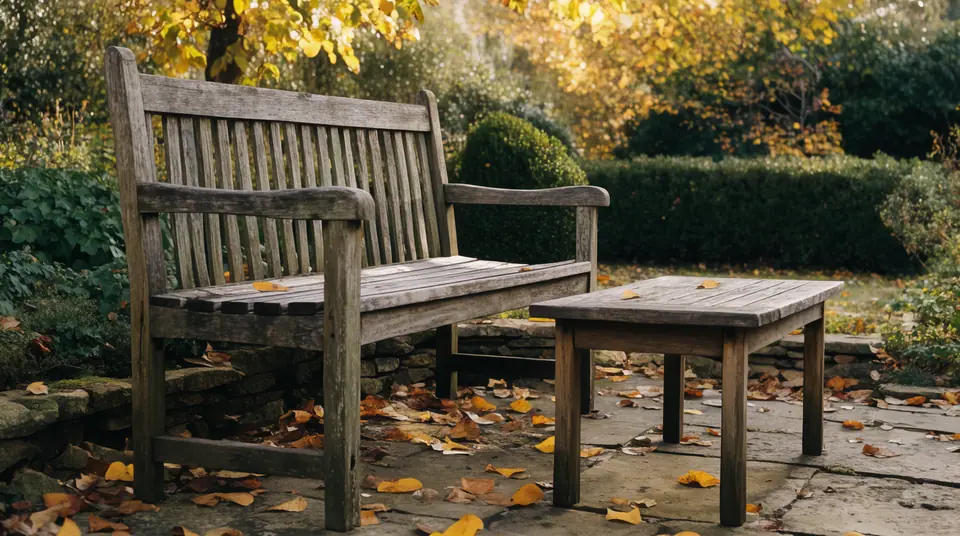
Grey, rough or algae-stained timber often comes back with a good wash. For teak, scrub with a teak cleaner or soapy water, rinse, let it dry, and rub lightly along the grain with fine sandpaper to lift the grey surface. Acacia and other hardwoods respond in the same way.
What you do next depends on the look you want. Weathered silver-grey is a colour change, and the wood is still sound. Splits, soft patches and wobbly joints are different, and those need repair before any finish goes on. See wooden garden furniture for the common timbers.
Should you use teak oil on outdoor furniture?
It depends, and the manufacturer's advice comes first. Many teak makers say outdoor teak does not need oil, and oil can darken unevenly or feed mould on damp surfaces. You have three choices.
- Weather it. Wash it once a year and let it go silver-grey. This asks for the least work.
- Use a teak sealer or protector. It holds the honey colour for longer, and you reapply it as the label directs.
- Use oil. It restores colour quickly, but you will repeat it often, so choose it only if you enjoy the job.
Acacia generally needs more care than teak, so a sealer or oil is more likely to be recommended for it.
If you choose a sealer or oil, apply it to clean, dry wood on a dry, mild day. Brush on a thin coat, wipe off the excess after the time on the label and let it cure before anyone sits down. Thick coats stay tacky and attract dirt. Oily rags can heat up as they dry, so spread them flat outdoors before you bin them.
Is a pressure washer safe on garden furniture?
Generally no. High pressure lifts and snags weave, strips powder coating and forces water into joints and hollow legs. Do not use one close to rattan-style furniture or a coated frame. If the maker allows it on wood, use the lowest setting and keep the nozzle well back. A hose and brush is safer and rarely much slower.
A cleaning routine through the year
| Time of year | What to do |
|---|---|
| Spring | Wash everything, check joints and screws, touch up chips and decide whether to treat wood |
| Summer | Wipe down regularly and clear spills and bird droppings quickly |
| Autumn | Wash, dry fully, clean and store cushions, and sweep leaves from the seating area |
| Winter | Use breathable covers or store indoors, and check after storms |
The colder months need more care than a calendar line allows, so read our guide to protecting outdoor furniture in winter.
How do you deal with stubborn marks?
Green algae and moss come off with soapy water and a soft brush, and moving the furniture to a spot that dries faster helps them stay away. Soften bird droppings with a wet cloth before you wipe, as dry scrubbing can scratch. Tree sap should be treated early with warm soapy water, and check the care guide before using any solvent.
Once the furniture is clean and dry, a snug, breathable cover keeps it that way for longer. Browse outdoor furniture covers and choose one with vents, as trapped condensation is a common cause of mildew.