The Best Garden Furniture for Small Gardens
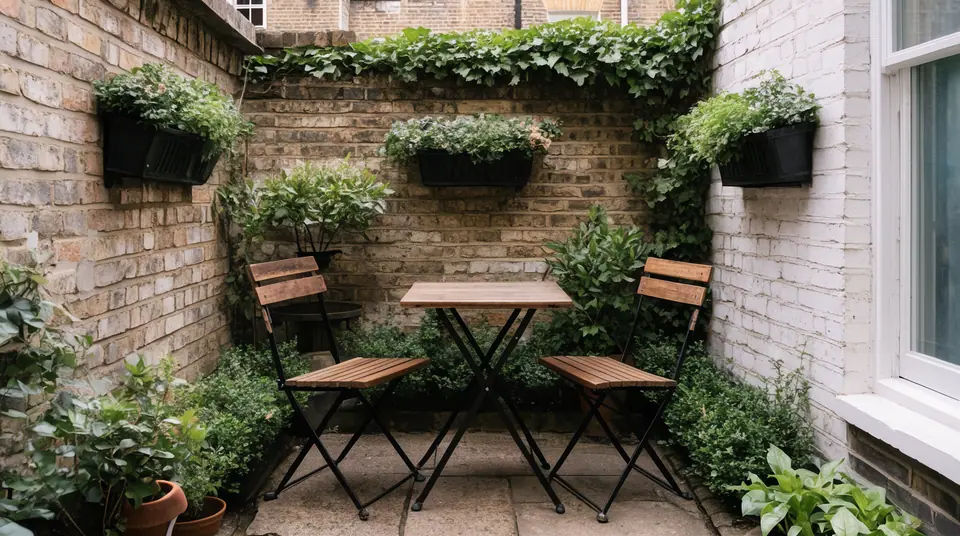
Small gardens suit furniture that is compact and light, and that folds, stacks or does two jobs. A bistro set, a slim bench and a couple of folding chairs usually work better than a scaled-down dining set. Measure the patio, keep a clear route through it, and choose open-framed pieces so the space still feels airy.
Everything depends on the floor area, so that is where to start.
Measure the floor before you browse
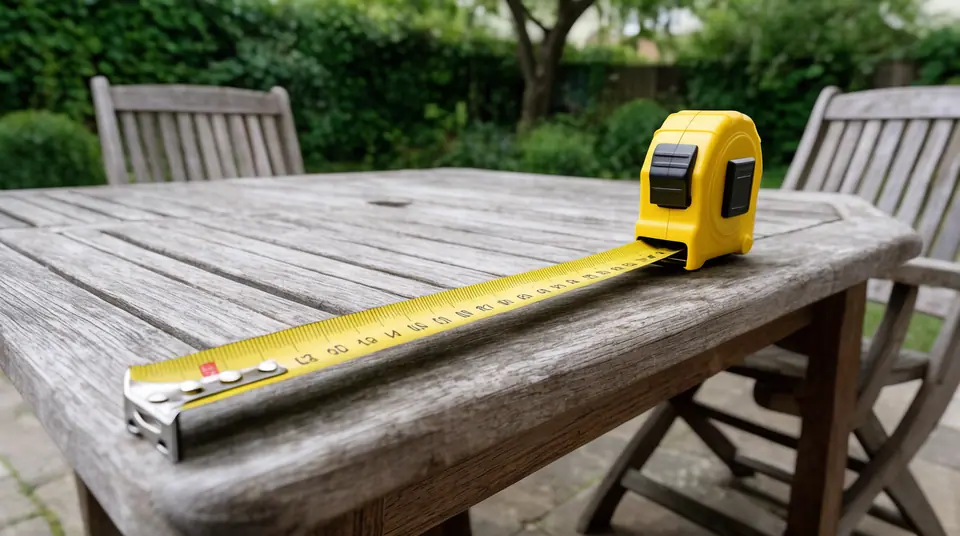
Mark the area where seating could go with chalk or masking tape, then stand a chair in the outline and sit in it. Leave 75cm to 100cm behind a chair for pulling out, and keep a walkway at least 60cm to 80cm wide. If the space cannot give you that, you need smaller furniture or fewer pieces. These figures are rules of thumb, so adjust them to your own garden.
Look up as well as down. A low wall, a fence or a window sill can double as a shelf or a perch, and that frees floor for the pieces you cannot do without.
Which furniture fits a small garden?
Bistro sets
A small round or square table with two chairs is the classic answer. It takes little room, suits a morning coffee spot and often folds flat. A table about 60cm across handles drinks and a light breakfast, and a little more helps if you want to eat. Browse garden bistro sets and compare the table diameters.
Folding and stacking chairs
These live in a shed or against a wall until guests arrive. Pick chairs that fold flat, and check that the hinges feel solid and the seat does not flex. A set of four stacks into the space of one.
Benches along a boundary
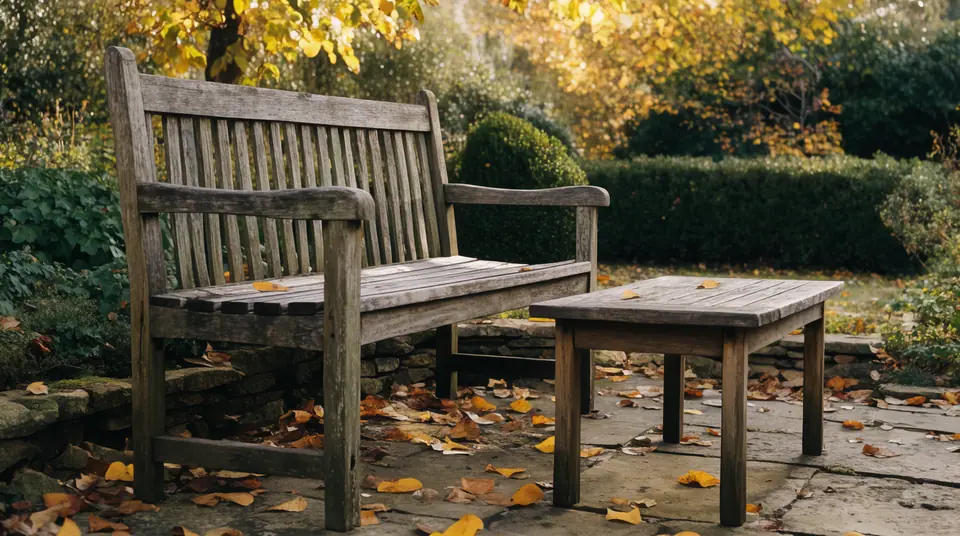
A bench sits flat against a fence or wall and leaves the middle of the patio free. A slim two or three-seater fits under a window. Look at garden benches with storage if cushions need a home.
Compact corner sets
If the garden has a spare corner, a small modular set can use dead space well. Check the footprint of both arms, because some sets look compact but extend further than expected.
Hanging and wall-fixed pieces
Fold-down wall tables lift things off the floor. A hanging egg chair needs strong support and room to swing, so it suits only some layouts.
How the options compare
| Option | Seats | Best for | Check |
|---|---|---|---|
| Bistro set | 2 | Courtyards and balconies | Table size for meals |
| Folding chairs | Flexible | Occasional guests | Hinge strength |
| Bench | 2 to 3 | Narrow gardens | Seat depth and back comfort |
| Compact corner set | 3 to 5 | Corner spaces | Full footprint, including arms |
| Wall-fixed or hanging | 1 to 2 | Very tight floors | Wall strength and fixing rules |
Which materials work best in tight spaces?
Light frames are easier to shift, so aluminium and slim weave over an aluminium frame suit small patios. Steel is strong but heavier, and it needs a watchful eye for rust at scratches. Wood looks lovely but can feel bulky unless the design is slim. A glass top reflects light and looks less heavy, though it shows marks and needs wiping more often.
Our small garden furniture range gathers the compact options in one place.
How can you make a small garden feel bigger?
Choose open frames, because you can see through them and the area feels larger. Stay with one colour family, since a narrow palette makes a small space calmer. Wall planters, shelves and hooks keep the floor clear, and a bench with a lid holds cushions out of sight.
Keep one zone empty. A patch of bare floor makes the seating feel less crowded, and it gives you somewhere to stand a drink or turn a pushchair.
Storage is the hidden cost of a small plot. A bench or deck box with a lid keeps cushions out of the rain and gives you extra seating. Wall hooks hold folding chairs flat against a fence, and a fitted, breathable cover protects the set when it stays outside. Choose furniture you can store in the space you have today.
Does a small garden need a table, and can it still seat guests?
A table is optional. If the main use is coffee and a book, a pair of chairs and a side table about 40cm to 50cm across will do the job. Meals call for a proper table, and a drop-leaf or extending model gives you a surface when you need one and folds away afterwards. Measure an extending table open as well as closed.
Guests are easier than they sound. Keep two or three folding chairs or stools in the shed and bring them out when friends visit. A bench takes more people than its width suggests, because people sit closer than they do on separate chairs. A small side table can double as a seat, and floor cushions work for a short stay.
What changes on a balcony?
A balcony adds weight limits, wind and sometimes lease rules. Check what your building allows, and choose light pieces that fold away. Anything tall catches the wind, so low seating is often safer, and a table that clamps to the railing saves floor. Our balcony furniture page covers these limits in more detail.
What mistakes do small-space buyers make?
The commonest is buying by seat count without checking the table size. Chairs also need room to be pulled out, and that gets forgotten when a drawing shows them tucked in. Bulky cushions with nowhere to live take over a small patio in wet weather. Measure the side passage too, as a narrow one limits what can be carried through.
If you do want a table for four, work through the dining set size guide before you buy, so you know how much room each size takes. A tape measure and an afternoon with chalk will save you a return.
Finally, avoid buying every piece at once. Start with one seat and one surface, live with them for a month, and add only what the space asks for. Small gardens fill up quickly, and a half-empty patio is easier to fix than a crowded one.